
Is It Cheaper To Insure A New Car Or A Used Car?

Costs, Coverage, and Savings
Choosing between new vs. used car insurance is an important decision for drivers looking to balance costs and coverage. Whether you’re insuring a new Ford or an older vehicle, understanding the factors that influence car insurance costs can help you make an informed decision. Comparing coverage requirements, premiums, and savings opportunities for newer cars and used vehicles ensures that you get the right protection and Ford for your needs. In this guide, Crossroads Ford of Sanford will help you explore the key differences in car insurance for new vs. used cars, from coverage levels to cost-saving strategies. By evaluating factors like vehicle age, driving history, and the car’s value, you can select the best option that offers peace of mind and fits your budget. Visit us today in Sanford, NC!
How Much Does It Cost To Insure A New Car?
The cost of new vs. used car insurance varies significantly due to factors like vehicle age, repair costs, and coverage requirements. Newer Fords like the Ford F-150 generally have a higher value, which means they require higher coverage levels, leading to higher car insurance costs. These vehicles often come equipped with advanced safety features such as Automatic Emergency Braking, which can lead to higher repair costs in the event of a collision, even though they might reduce the likelihood of accidents.
On the other hand, older vehicles tend to have lower insurance premiums because their car’s value has depreciated over time. However, they may be more prone to theft, especially if they lack modern car safety technology. This increased theft risk can negatively affect car insurance premiums and change how you compare new vs. used car insurance overall. Additionally, financed newer vehicles often have stricter coverage requirements, such as comprehensive and collision coverage, to protect the lender’s investment. In contrast, older cars without loans may allow drivers to opt for liability insurance only, which offers a lower-cost option.
Driving habits and the likelihood of accidents also play an important role in determining the cost of insurance rates for both newer and older cars. Drivers with a clean driving record have the advantage of being safer and may qualify for lower premiums. Conversely, poor driving habits or a history of accidents can increase auto insurance rates regardless of the car’s age. Keeping these factors in mind is essential when making decisions on the pros and cons of new vs. used car insurance.
How Credit Score and Driving History Affect Rates
Your credit score and driving history are significant factors that influence auto insurance rates, whether you’re insuring a new car or an older vehicle. When comparing new vs. used car insurance, it is important to remember that a good credit history demonstrates financial responsibility, which can help you secure lower insurance premiums. Auto insurance companies often view individuals with strong credit scores as more responsible and thus less likely to file claims, making them eligible for discounts.
Similarly, maintaining a clean driving record can lead to lower rates. Good drivers with no history of accidents or traffic violations are rewarded with lower premiums as they represent a reduced risk to insurers. On the other hand, even if you own an older vehicle, a poor driving history may negate the potential savings associated with its lower value. Thus, both credit score and driving history are key considerations when comparing insurance options for newer vehicles and older cars, particularly when deciding which new vs. used car insurance plan best suits your budget and needs.
Coverage Options for Newer Cars vs. Older Vehicles: Are New Cars Cheaper To Insure?
Newer Cars: Coverage Considerations
When insuring newer cars, comprehensive and collision coverage are often required, especially if the vehicle is financed through an auto loan. These coverage types protect against a range of risks, including damage from accidents, theft, or natural disasters. For drivers evaluating new vs. used car insurance, comprehensive and collision coverage are usually more relevant to newer vehicles because of their higher value.
Another important consideration for newer vehicles is gap insurance, which can be invaluable during the first year of ownership. Gap insurance provides coverage over the difference between the car’s value and the remaining balance on the auto loan in the event of a total loss, ensuring that you are not left with out-of-pocket expenses. Newer cars often feature advanced safety technology and driver-assistance systems, which can potentially lower insurance costs. However, repair costs for these technologies can increase car insurance premiums if they are damaged.
Additionally, vehicles with strong safety ratings, like the Ford Explorer and Ford Maverick, may qualify for further insurance discounts, as they are considered less risky to insure. If you’re purchasing a newer vehicle, consider how its car manufacturer and safety features may influence your coverage requirements and costs, especially when deciding which new vs. used car insurance option provides the best overall value.
Older Vehicles: Coverage Considerations
Insuring an older vehicle often involves different considerations than insuring a newer car. Liability coverage is typically the most important type of insurance for older cars, as it makes sure you meet legal requirements and provides financial protection in case of accidents where you’re at fault. For vehicles with lower value, dropping collision coverage might be a practical decision to reduce insurance costs, especially if the repair costs would exceed the car’s value.
Even for older vehicles, car safety ratings and overall condition can still influence car insurance premiums. Some older cars may have features that qualify for insurance savings, such as anti-theft devices. However, older vehicles without modern safety technology might face higher premiums due to increased risks. When you are comparing new vs. used car insurance, drivers of older cars should evaluate whether additional coverage, like comprehensive insurance, is worth the extra expense or if liability-only coverage offers the best balance of cost and protection.
Full Coverage vs. Liability Insurance: Making the Best Choice
Deciding between full coverage and liability insurance depends on the value of a vehicle, its repair costs, and your financial situation. Full coverage insurance provides liability, comprehensive, and collision coverage, offering maximum protection against a wide range of risks. This type of coverage is often the best option for newer cars or high-value vehicles, as it provides peace of mind in the event of accidents, theft, or natural disasters. When you are comparing new vs. used car insurance, full coverage frequently becomes part of the conversation for higher-value or newer vehicles.
However, the higher premiums associated with full coverage might not be financially practical for everyone. Liability-only insurance, on the other hand, is a more affordable option, particularly for older cars with less value. It covers the costs of damages or injuries caused by you to others, but does not cover your own vehicle. For an older vehicle with minimal value, opting for liability insurance can result in significant savings on car insurance premiums.
However, it’s essential to consider the potential out-of-pocket costs if your vehicle is damaged or totaled. When determining the type of coverage to choose, consider factors like the car’s age, car price, and replacement costs. For example, if you drive an older vehicle that would cost more to repair than replace, liability-only insurance might be sufficient. On the other hand, if you own a newer car or one with higher repair costs, full coverage might be the better choice to ensure adequate protection. Understanding these trade-offs is crucial to choosing the right new vs. used car insurance solution for your lifestyle and budget.
How to Save on Car Insurance Premiums: Smart Savings Strategies
Saving on car insurance premiums requires careful planning and consideration of various strategies. One effective way to lower your monthly payments is by increasing your deductibles. While this means you’ll pay more out-of-pocket in the event of a claim, it can significantly reduce your monthly insurance costs if you’re a safe driver and unlikely to file frequent claims. This savings approach can apply to both new and used vehicles and should be weighed alongside your choice of new vs. used car insurance.
Bundling policies, such as combining your car insurance with home insurance, is another great way to unlock insurance discounts from many auto insurance companies. Telematics programs, which monitor your driving habits using a mobile app or device, can reward safe driving behavior with lower premiums. Good drivers who avoid speeding, hard braking, and excessive mileage may qualify for significant savings through these programs.
Additionally, it’s a good practice to compare car insurance quotes annually. Shopping around ensures you’re getting the best rates from the best car insurance companies and helps you take advantage of new offers or discounts. Maintaining a clean driving record and a good credit score is also essential for keeping car insurance costs low. Insurers view drivers with a clean record and strong credit history as lower-risk, which can result in lower premiums. If you’ve improved your credit score or driving habits recently, inform your insurer or shop for new quotes to potentially secure better rates on your new vs. used car insurance options.
Additional Savings Tips
Another way to save on car insurance is to pay your monthly premiums in full up front, as some insurers offer discounts for customers who pay annually instead of monthly. When shopping for vehicles, consider those with advanced safety technology and strong safety ratings. Cars equipped with features like Automatic Emergency Braking, Lane-Keeping Assist, and anti-theft devices not only provide peace of mind but also qualify for insurance savings from many providers. These considerations can influence your overall new vs. used car insurance comparison and long-term ownership costs.
Roadside assistance, often included in comprehensive insurance policies, is another benefit to consider. While it may add a small cost to your premium, it can save you significant expenses in emergencies like breakdowns or flat tires. Additionally, vehicles with a manufacturer’s warranty may lower your overall maintenance costs, making them more appealing from both a financial and insurance perspective. Always review your coverage selection carefully to ensure it aligns with your budget and protection needs, paying close attention to how different new vs. used car insurance choices affect your total expenses.
Find the Right Balance For You
Newer cars often come with higher premiums due to their advanced safety features, higher value, and stricter coverage requirements. However, they may offer lower long-term repair and maintenance costs, as well as insurance savings from features like Automatic Emergency Braking. Older vehicles, while offering lower insurance costs, may carry risks such as higher theft rates and increased repair expenses. Evaluating the car’s age and value, as well as your driving habits, is essential to finding the best car insurance policy for your needs and deciding which new vs. used car insurance structure makes the most sense.
Ultimately, the decision between new vs. used car insurance comes down to your financial situation, vehicle type, and coverage requirements. Whether you choose a new car or an older vehicle when shopping at Crossroads Ford of Sanford, comparing coverage options and car insurance quotes from the best car insurance companies will help you secure the most suitable policy. By making an informed decision about new vs. used car insurance, you can enjoy lower premiums, peace of mind, and the right level of protection for your vehicle. Visit us today in Sanford, NC!

Finding the Best Option for Your Budget
When it comes to deciding on your next vehicle, understanding new vs. used car prices can make or break your budget. As car prices trend up and down with shifts in the auto market, it becomes even more important to compare car prices carefully instead of rushing into a decision. Whether you’re considering a new Ford with advanced technology or a reliable used vehicle, making an informed decision is crucial.
New car prices are often higher due to their cutting-edge safety features and advanced amenities, while used cars come with lower prices and reduced depreciation rates. By understanding vehicle prices, financing options, and insurance costs, car buyers can work with Crossroads Ford of Sanford to navigate the complexities of the car market and secure the best deal for their next car purchase. Comparing new vs. used car prices also helps you decide whether a newer model or an older one gives you more value over time. Visit us in Sanford, NC!
Why New Car Prices Are Higher and Their Benefits
Breaking Down the Sticker Price
New car prices vs. used are typically higher because they include the latest advanced technology, modern design, and cutting-edge safety features. Car manufacturers like Ford invest heavily in research and development to equip new cars with features like Adaptive Cruise Control, Lane-Keeping Assistance, and infotainment systems, which can drive up the sticker price. For car buyers, these features often translate to enhanced driving comfort, better car safety, and a safer road experience that many car shoppers are willing to pay for when they compare new vs. used car prices.
Additionally, new vehicles come with full factory warranties, which can significantly reduce repair costs during the early years of ownership. This warranty coverage gives car shoppers peace of mind, knowing they won’t face unexpected car repair expenses soon after purchasing. Crossroads Ford of Sanford also frequently offers financing deals with lower interest rates, which can make the car payment and overall monthly payment on a new car more manageable for qualified buyers. Some promotions may feature special auto loan interest rates that keep financing costs in check, especially for shoppers with a strong credit score.
The Role of Depreciation and Resale Value
One of the most significant factors affecting new vs. used car prices is depreciation. A new car begins to lose value the moment it is driven off the lot, with the depreciation rate being highest during the first year. This means the transaction price for the same car will drop sharply if it becomes a used vehicle, making its resale value much lower in the short term. Over time, this depreciation directly impacts car values and the car pricing you see in guides and online listings.
However, after this initial steep decline, the depreciation rate tends to stabilize, and vehicle prices start to level out. For car buyers considering their next car, it’s important to weigh the benefits of owning a new vehicle against this rapid loss in value. While new cars offer predictable costs, advanced technology, and strong car safety features, the lower resale value and high initial investment might not align with every budget. Looking at new vs. used car prices side by side can be a powerful piece of car advice, showing you how much value you may lose or retain over time based on your buying choices.
Why Used Cars May Be a Smarter Financial Choice
Lower Prices and Total Cost of Ownership
For those focused on budget-friendly buying choices, a used vs. a new car price often presents a more affordable option. Used vehicles generally come with significantly lower sticker prices compared to a new vehicle, offering car buyers better upfront value. This lower entry cost can reduce the total cost of ownership, especially when factoring in smaller loan amounts and reduced monthly payments. In many cases, the loan terms on a used car will still result in a manageable car payment, even if the interest rate is slightly higher.
Furthermore, a used car’s depreciation has already occurred, meaning its resale value won’t drop as sharply as a new vehicle’s. This can be advantageous for buyers looking for a car that holds its value better over time and who are watching the used car market trend closely. When comparing new vs. used car prices during a road test or a visit to the showroom, many shoppers find that a well-maintained used car delivers the practicality they need without stretching their budget.

Factors to Check Before Buying
While used cars can be a great financial choice, car shoppers need to perform due diligence before making a purchase. Start by reviewing the car’s history report to check for past repairs, accidents, or other potential red flags. This step is crucial for understanding the reliability and overall condition of the used vehicle and can help you anticipate future car repair needs, factoring in everything for new vs. used car prices.
Using trusted value tools like Kelley Blue Book can help ensure you’re getting fair car pricing and avoid overpaying. Additionally, inspect the vehicle’s mileage, trade-in value, and physical condition to gauge its long-term reliability. Paying attention to these details can help you secure the best deal while minimizing future repair costs. When you weigh new vs. used car prices using resources like car value guides and online listings, you gain clarity on whether the vehicle is priced appropriately for its age, condition, and local car inventory.
How Financing and Insurance Costs Differ
Loan Terms and Auto Loan Rates
When comparing new vs. used car prices, financing options often play a significant role in the decision-making process. New cars are more likely to qualify for special financing rates or incentives from automakers and dealerships, resulting in lower interest rates and potentially reduced monthly payments. However, the loan amount for a new car will typically be higher due to its higher price, which can raise the total financing costs over the life of the loan.
In contrast, used cars usually come with higher auto loan interest rates, as lenders view them as a riskier investment. That said, the smaller loan amounts associated with used vehicles can offset the impact of higher financing rates, making them more affordable for many buyers. This is especially true when you compare new vs. used car prices and see how much less principal you are financing on a used option. Carefully reviewing loan terms, auto loan rates, and your credit score can help you decide which option fits your budget best and keeps your next car from becoming a financial burden.
Insurance Costs and Premiums
Auto insurance premiums can vary significantly between new vs. used car prices. For new cars, insurance rates are often higher because the replacement cost is greater. Advanced technology and safety features in new vehicles can also contribute to higher premiums, as repairing or replacing these components can be expensive. Car insurance companies factor in everything from vehicle production costs to average car repair bills and safety ratings when they set their prices.
Used cars, on the other hand, typically come with lower insurance premiums. This is largely due to their reduced value and lower repair costs. Car insurance companies consider these factors when calculating premiums, making used vehicles more cost-effective to insure. However, car buyers should always compare insurance quotes to ensure they’re getting the best deal. Monitoring insurance rates and ongoing insurance premiums is just as important as reviewing price changes in the showroom. When you compare new vs. used car prices alongside coverage options, you’ll see how auto insurance and ownership costs combine to affect your overall budget.
How to Compare New and Used Cars Effectively
Evaluating Vehicle Prices and Ownership Costs
When deciding between a new or used vehicle, it’s essential to evaluate all aspects of vehicle prices and ownership costs. Start by considering your budget and determining how much you can afford in terms of monthly payment when it comes to new vs. used car prices. Factor in financing costs, loan terms, and potential auto loan interest rates, as these will directly impact your total expenses and car payment over time.
Beyond the purchase price, account for additional costs such as repair costs, insurance rates, dealer fees, and even how you plan to pay, whether you’ll use cash, an auto loan, or a credit card for part of the transaction price. Also, consider the car’s safety features and how they contribute to long-term value and car safety for your family. Balancing these elements, while keeping an eye on the broader car prices trend and auto market conditions, will help you make a more informed decision about your next car. As you compare new vs. used car prices, remember to factor in resale value and how long you plan to keep the vehicle.
Timing Your Purchase
Timing is another critical aspect of comparing new and used cars. The best time to buy a used car often aligns with favorable market trends, such as when car inventory is high or during end-of-year car sales events. Monitoring the auto market for fluctuations can also help you secure a better deal on new vs. used car prices.
For new cars, pay attention to financing incentives and seasonal promotions offered by automakers and dealerships like Crossroads Ford of Sanford. Staying informed about price changes, vehicle production trends, and overall vehicle sales can help you choose the right time to make your purchase and maximize savings. When you track new vs. used car prices over several months, you’ll see how the used car market trend and overall auto market conditions affect both sticker prices and the available financing options.
Choosing Your Next Car: New or Used?
Exploring new vs. used car prices ultimately depends on your budget, priorities, and lifestyle needs. If you value advanced technology, cutting-edge safety features, and predictable costs, a new car might be the right choice for you. New vehicles often come with full factory warranties and, often, lower interest rates, offering peace of mind and convenience. For some buyers, the appeal of a newer model with the latest connectivity and driver-assist systems makes the higher upfront cost worthwhile, especially when they want the best car safety features.
However, if you’re looking for better upfront value and lower prices, exploring the used car market can be a smarter financial move. Used vehicles come with lower sticker prices, reduced depreciation rates, and often lower insurance premiums, making them ideal for car buyers focused on minimizing costs. Carefully reviewing the car’s history, mileage, and trade-in value can help ensure you’re purchasing a reliable vehicle that fits your values and long-term goals. As you weigh new vs. used car prices and look at different financing options, remember that both paths can lead to a smart purchase if you align them with your budget and priorities.
Crossroads Ford of Sanford Is Here To Help
Whether you choose to focus on the price of a new vs. used car when shopping at Crossroads Ford of Sanford, it’s essential to evaluate all aspects of ownership, including monthly payments, financing deals, financing rates, and repair costs. Consider how your choice affects long-term expenses like auto insurance, car repair, and everyday operating costs. Timing your purchase based on car market trends, car sales events, and shifting car inventory levels can also help you secure the best deal. By balancing your financial goals with your driving needs, using reliable car advice sources, and keeping a close eye on new vs. used car prices, you can confidently select the next car that fits your budget and lifestyle. Visit us at Crossroads Ford of Sanford today!
What Is The Ford F-150 Tremor® Package?
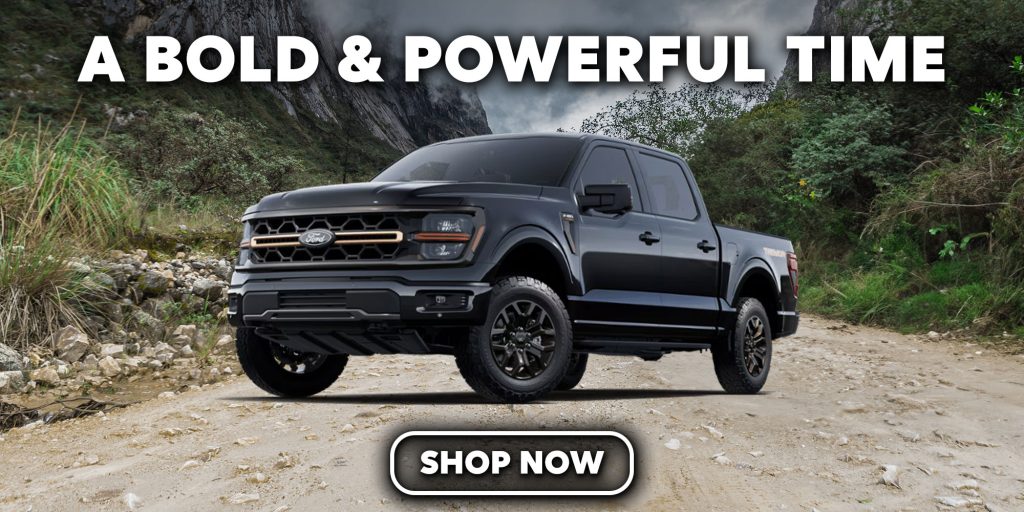
Built for the Trail, Tuned for Real-World Driving
Choosing the right trim level within the Ford F-150 lineup is a good idea for drivers who want confidence both on rugged terrain and during everyday highway driving. At the heart of the Ford F-150 Tremor® package is a carefully engineered balance of durability, control, and versatility. From its enhanced off-road capability to its refined on-road manners, this truck is designed to adapt seamlessly to changing environments while maintaining the practicality and reliability that the Ford F-150 lineup is known for. These unique package options include the Tremor® (401A) Equipment Group, Tremor® (402B) Equipment Group, and the Tremor® High (402A) Equipment Group. They offer enhanced performance, exclusive features, and rugged styling, making it a standout choice for adventure seekers and truck enthusiasts alike. Find out which Ford F-150 Tremor package best suits you when you visit Crossroads Ford of Sanford today for a test drive!
Key Features of the Ford F-150 Tremor
Before we dive into the Ford F-150 Tremor package, let’s introduce you to the model by itself. The Ford F-150 Tremor trim is engineered to handle various terrains, equipped with a standard 3.5L EcoBoost® V6 engine with Auto Start-Stop Technology that puts out up to 400 horsepower and 500 lb.-ft. of torque. You also have the option of choosing the available 5.0L Ti-VCT V8 engine that’s capable of producing 410 lb.-ft. of torque, but at a higher RPM. Get in touch with Crossroads Ford of Sanford to learn more about the Ford F-150 Tremor 0-60 MPH speed. 33-in. all-terrain tires, an off-road-tuned front and rear suspension that includes 1.7-in. twin-tube dampers, selectable Rock Crawl mode, and Ford Trail Control™ are among other standard features the Ford F-150 Tremor offers. Stepping inside, the interior boasts unique styling, with available leather-trimmed bucket seats adorned with the Tremor logo, convenient technology and connectivity options, and safety to ensure peace of mind wherever you go.
With its two powerful engine options, advanced technology, and tailored off-road enhancements, the Ford F-150 Tremor strikes the perfect balance between workhorse utility and weekend adventure. Whether you’re tackling rocky trails or hauling heavy loads, this trim level ensures you can do it all with confidence and style. When you read more about the Ford F-150 Tremor package, you’ll discover even more features that prioritize off-road capability, rugged performance, and advanced technology. Designed for enthusiasts who demand more from their truck, it’s a standout choice for adventurers and hardworking drivers alike.
Discover the Ford F-150 Tremor Package For You
It’s time to take a look at the Ford F-150 Tremor packages available for your powerful road companion.
Tremor (401A): This is the foundational Ford F-150 Tremor package, providing essential off-road capabilities and distinctive styling elements.
- Trail Control™ with Trail 1-Pedal Drive and Trail Turn Assist
- Off-road front and rear shocks with Tremor® logo on rear
- Improved ride height, approach angle, and departure angle
- Skid plates
- 18-in. alloy wheels with dark matte finish
- Unique dual-outlet exhaust
- Unique Tremor Style running boards
- Ford BlueCruise Hands-Free Highway Driving
- Unique Black Sport Cloth with Active Orange Stitching on Seats and Console
- Heated front seats
- B&O® Sound System by Bang & Olufsen® with HD Radio™ and eight speakers, including subwoofer
- Six upfitter switches
- 2 kW Pro Power Onboard
- Adaptive Cruise Control
Tremor (402B): Building upon the 401A, this package introduces a range of enhanced comfort, convenience, and advanced off-road performance features.
- Front axle with Torsen® differential
- Heated steering wheel
- Hi-lock transfer case
- Media bin door
- Power-adjustable pedals with memory
- Memory sideview mirrors: power-folding, power glass, heated, turn signal, driver side auto-dimming, high-intensity LED security approach lamps, LED sideview mirror spotlights with body-color skull caps
- Rain-sensing wipers
- Unique Tremor® heated and ventilated leather-trimmed bucket seats
- Memory driver’s seat
- Universal garage door opener
Tremor High (402A): This top-tier package offers the most comprehensive set of features, including advanced off-road technology, premium audio, and additional utility and convenience packages.
- Two-speed automatic AWD with mechanical locking 4WD
- Modular front bumper
- LED taillamps
- Second-row heated seats
- B&O® Unleashed Sound System by Bang & Olufsen® with HD Radio™ and 14 speakers, including subwoofer
- Bed Utility Package
- Tow/Haul Package
- Mobile Office Package
A Truck That Matches Workdays and Weekends
For drivers who expect their truck to adapt as quickly as their schedule, the Ford F-150 Tremor packages support a lifestyle that blends productivity with adventure. Imagine heading out before sunrise with tools secured in the bed, relying on features like skid plates, improved ride height, and off-road-tuned shocks to confidently reach remote worksites or trailheads. When the pavement ends, Trail Control™, Trail 1-Pedal Drive, and the Hi-Lock Transfer Case help maintain control over uneven ground, while selectable drive modes allow the truck to adjust to changing conditions. As the day winds down, heated front seats, available premium audio, and hands-free highway driving technology make the drive home relaxed and comfortable. Whether hauling gear, exploring back roads, or towing equipment for a weekend getaway, the Ford F-150 Tremor is built to support an active lifestyle without sacrificing everyday comfort.
Stand Out. Stand Proud.
The Ford F-150 Tremor seamlessly combines off-road capability with everyday practicality, making it an exceptional choice for drivers who demand versatility from their truck. From its rugged design to its advanced technology and powerful performance, the Ford F-150 Tremor package is designed to handle work, play, and everything in between.
Perfectly suited for drivers in Sanford, NC and adventure enthusiasts everywhere, visit Crossroads Ford of Sanford to find the perfect Tremor package for your Ford F-150 Tremor today!
What Is The Ford F-150 FX4® Off-Road Package?
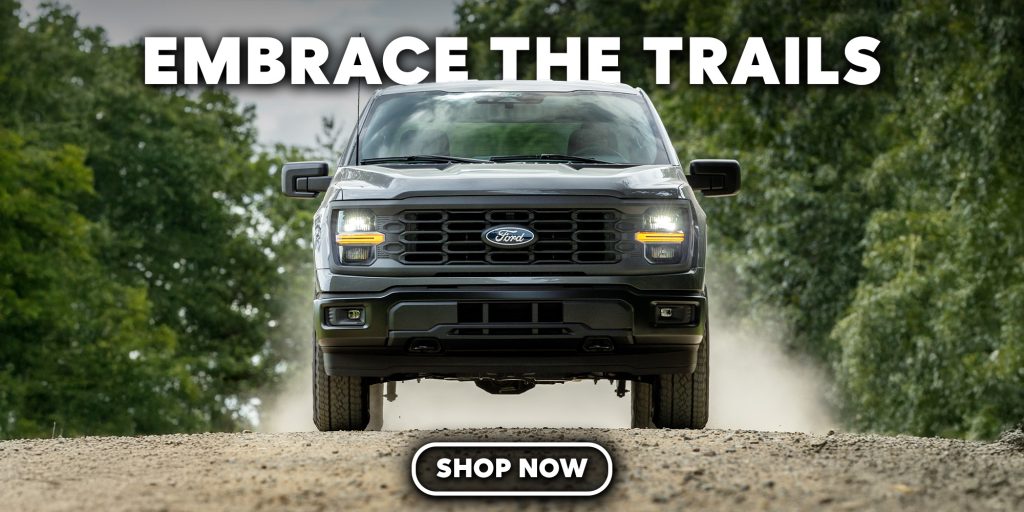
Trail Ready Confidence
For drivers who want a full-size pickup that can haul, tow, and still disappear down a dirt road after work, the Ford F-150 is an appealing choice. When equipped with the FX4® Off-Road Package, the Ford F-150 becomes even more tuned for the trails, muddy job sites, and weekend camping trips. Positioned alongside specialized off-road trims like the Ford F-150 Tremor® and the desert-bred Ford F-150 Raptor®, the Ford F-150 FX4® Off-Road Package gives more trim levels access to serious trail gear without compromising everyday comfort. Equip your Ford truck with this package from Crossroads Ford of Sanford today!
Built Tough First
Before you even add the Ford F-150 FX4® Off-Road package, the newest model brings serious core capability. Engine choices include multiple EcoBoost® V6 options, a 5.0L V8, and the available hybrid PowerBoost®, which combines power with practical fuel economy, all paired with a smooth automatic transmission for confident road manners. Depending on vehicle configuration, the Ford F-150 delivers strong towing capacity up to 13,500 lbs. and payload capacity of up to 2,440 lbs., optimizing work or play. Underneath, robust suspension system components, disc brakes, and carefully tuned front shock absorbers and rear wheels help the truck stay composed whether it is backing a boat down a ramp or navigating tight city streets.
From the driver’s seat, you see a modern instrument cluster and productivity screen that keep key data close at hand, while an available center console and floor liner accessories make the cabin easier to live with day to day. Safety-minded shoppers appreciate systems like AdvanceTrac™ with Roll Stability Control™ that help manage tricky road conditions or a sudden hill descent on wet pavement, along with tow hooks and a Class IV Trailer Hitch that support secure trailering. Ground clearance, angle of approach, and departure angle specifications vary by trim levels and cab style, but the Ford F-150 is built with off-pavement routes in mind. Even before the Ford F-150’s FX4® Off-Road Package comes into the picture, the truck and its trim levels stand out as a hardworking Ford truck family ready for both job sites and everyday errands.
Ford F-150 FX4® Off-Road Package Features
The heart of the Ford F-150 FX4® Off-Road story is how this package layers trail-focused gear onto mainstream trims. It includes features like rugged skid plates protecting the fuel tank, transfer case, and front differential, along with all-terrain tires that are better suited to rocks, mud, and ruts. Off-Road Tuned Front Shock Absorbers work with the rest of the suspension to smooth harsh bumps, while steel wheels or all-terrain wheel options help take abuse without sacrificing style. For shoppers comparing Ford F-150 FX4® Off Road Package and other off-road choices like Ford F-150 Tremor® or the more extreme Ford F-150 Raptor®, this package is worth considering when you want capability with more familiar cabin refinement.
At the drivetrain level, the Ford F-150 FX4® Off-Road Package pairs well with your truck’s four-wheel drive strength. A tough rear axle and rear differential work with limited slip and, when equipped, a locking differential so rear-end traction stays predictable when one wheel lifts or hits loose rock. On many builds, the Ford F-150 FX4® Off-Road Package pairs naturally with engines such as an EcoBoost® V6 or the hybrid PowerBoost®, using deep low-end torque to keep momentum on climbs. The combination of drivetrain tuning, drive type choices, and strong torque helps the Ford F-150 feel secure when towing a camper to a trailhead or working at low speed on slick surfaces.
Practicality At Your Disposal
Technology built into the Ford F-150 FX4® Off-Road Package supports control as terrain changes. Selectable drive modes let you tailor response to the type of terrain, and many models add Rock Crawl Mode within the overall Terrain Management setup so steep, rocky sections feel more manageable. Systems such as Trail Control, featured on the Ford F-150 Tremor and Raptor, operate like low-speed cruise control for off-road use, managing throttle and braking so you can focus on the line ahead. With the FX4® Package’s Hill Descent Control™, four-wheel drive, and strong chassis hardware, the Ford F-150 FX4® Off-Road Package readily tackles muddy forest roads, snowy access lanes, and rocky two-tracks in ways that appeal to owners who value resale value as much as weekend adventures.
Around the truck, practical details round out the Ford F-150 FX4® Off-Road experience. Tow hooks at the front and a trailer hitch at the back make recovery or trailer hookup easier. Inside, comfortable front seats, supportive rear seats, and smart storage in the center console keep passengers and gear secure, while the floor liner option helps contain dirt and mud that inevitably ride home after trail days. Available LED lighting and fog lamps are helpful if your trail run ends after sunset, and optional accessories like extended bed and interior add-ons let you fine-tune how your Ford F-150 FX4® Off-Road Package supports camping setups. For many shoppers comparing multiple trim levels and packages, you’ll discover that the Ford F-150 is more than a work truck and everyday commuter, it’s also a true backcountry partner.
Your Next Step Into the Dirt
In short, the Ford F-150 FX4® Off-Road Package takes the already capable truck and adds targeted hardware and settings that help you leave the pavement with confidence while still enjoying everyday comfort and technology on Monday morning. If you want a Ford F-150 FX4® Off-Road Package that can serve as both a family-ready daily driver and a trail-ready adventure rig, visit Crossroads Ford of Sanford to explore this package up close, compare builds, and schedule a hands-on test drive.
How Many Miles Can A Ford F-150 Last?
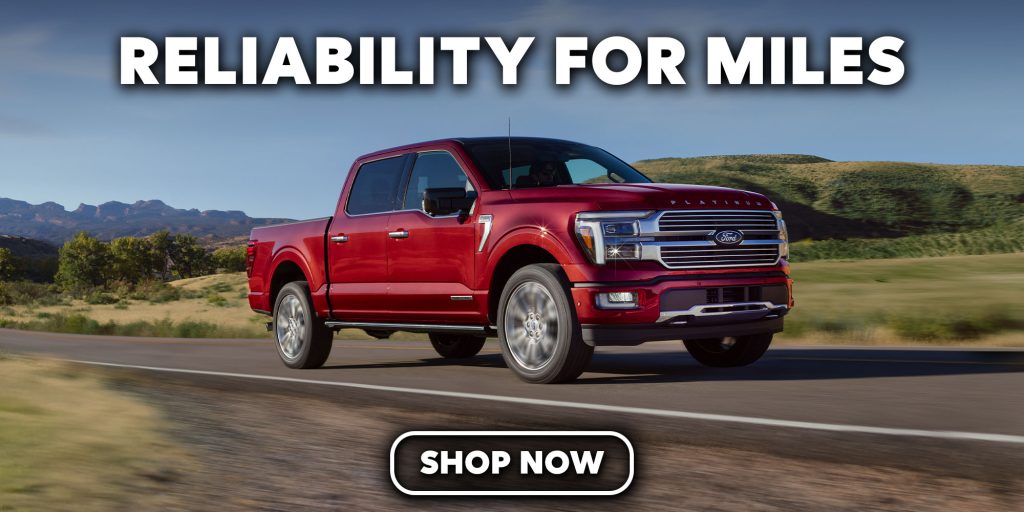
Going The Distance In A Ford F-150
The Ford F-150 is celebrated as a reliable Ford truck, often praised for its durability and ability to withstand years of wear and tear. A common question among truck owners and prospective buyers is, “how many miles can a Ford F-150 last?” With proper care and regular maintenance, this best-selling pickup truck can deliver exceptional longevity, making it a trusted choice for daily drivers and work truck enthusiasts alike.
From its robust engine options to its sturdy design, the Ford F-150 has been proven to stand the test of time. Whether you’re hauling heavy loads, embarking on off-road adventures, or simply using it as a daily driver, understanding the factors that impact its lifespan will help you maximize its performance and value for the long run. Visit Crossroads Ford of Sanford to test-drive the Ford F-150 today!
Average Lifespan of a Ford F-150 Truck
If you’re curious about the longevity of a Ford F-150, you can expect to drive one for a long time. When properly maintained, it’s known to last anywhere between 200,000 and 250,000 miles. With regular maintenance and care, it’s not uncommon for some high-mileage Ford F-150 trucks to exceed 300,000 miles, especially when driven under ideal conditions. How many miles a Ford F-150 can last is influenced by factors like driving habits, terrain, and weather conditions. For example, trucks driven primarily on highways tend to experience less wear and tear compared to those frequently subjected to off-road adventures or heavy towing.
Routine maintenance, such as regular oil changes, transmission fluid checks, and timely filter replacements, plays a critical role in maximizing the lifespan of your Ford F-150. Proper care ensures that essential components, like the engine and transmission, continue to perform efficiently even after years of use. With a well-documented service history, the chances of your Ford F-150 reaching or surpassing its mileage potential significantly increase.
How Does It Compare to Other Trucks?
In terms of how many miles a Ford F-150 can last, it often outperforms competitors like the Chevy Silverado 1500 and Ram 1500. Known for its durability and consistent reliability rating, the Ford F-150 stands as a top choice for truck owners seeking a vehicle that can handle the test of time. Its robust engineering and quality manufacturing make it a preferred option over other trucks in its class.
Additionally, the Ford F-150 shares reliability with other models in Ford’s lineup, such as the Ford Explorer and Ford Escape. These vehicles are also designed for long-term use, making Ford Motor Company a trusted name in the automotive industry. Whether you’re comparing it to competitors or other Ford models, the Ford F-150’s longevity and performance remain a standout feature.
Maintenance Tips
Regular maintenance is the best way to ensure that your Ford F-150 lasts for years to come. Routine tasks, such as regular oil changes, filter changes, and transmission fluid checks, are essential for keeping the engine and other critical systems in good condition. Additionally, it’s important to follow Ford’s recommended maintenance schedule for your specific model year, as this provides a comprehensive guide to keeping your truck in peak performance.
Other key maintenance tips to optimize how many miles a Ford F-150 can last include inspecting the water pump and cooling system for signs of wear, as these components play a vital role in regulating engine temperature. Staying proactive about maintenance not only prevents major repairs but also helps maintain the fuel efficiency and reliability of your Ford F-150. By dedicating reasonable effort to care for your truck, you can significantly extend its lifespan.
Proper Care for Heavy Loads and Daily Driving
If you frequently use your Ford F-150 for heavy loads or as a daily driver, proper care is crucial to avoid premature wear and tear. If you want to maximize how many miles a Ford F-150 can last, avoid overloading your truck beyond its towing or payload capacity, as this can place unnecessary strain on the engine, transmission, and suspension. Regularly inspect the wheel well and other vulnerable areas for rust, especially if you live in regions where road salt is common.
Maintaining tire rotations and ensuring proper alignment are also important for maximizing fuel economy and reducing uneven tire wear. These simple steps not only improve the performance of your truck but also contribute to its long-term reliability and how many miles a Ford F-150 can last. Whether you’re using your Ford F-150 for work or daily commuting, these practices will help keep it in good condition for the long run.
Signs Your High-Mileage Ford F-150 Is Still Reliable
A high-mileage Ford F-150 can still be a reliable vehicle if it exhibits key signs of good performance. Smooth engine operation and consistent transmission response are two major indicators that your truck is still functioning well. Additionally, the absence of significant rust or structural damage, even after years of use, is a positive sign that your Ford F-150 has been properly maintained.
Other factors to consider in how many miles a Ford F-150 can last include the functionality of components like the airflow sensor, ignition coils, and intake manifold. These parts play a crucial role in the truck’s overall performance and fuel efficiency. If these systems are operating efficiently, it’s a good indication that your high-mileage Ford F-150 remains in good condition.
Standing the Test of Time
The Ford F-150 is equipped with several features that enhance its durability and lifespan. For instance, engine options like the EcoBoost® engines are designed for long-term performance, offering a balance of power and fuel efficiency. They’re also engineered to handle heavy loads and challenging driving conditions, making them ideal for both work and leisure.
Another key factor contributing to how many miles a Ford F-150 can last is its military-grade aluminum-alloy body. This material not only reduces the overall weight of the truck, improving fuel economy, but also minimizes rust and corrosion, which can significantly extend the life of the vehicle. Additionally, the truck’s reliable automatic transmission ensures smooth operation and reduces the likelihood of major repairs over time.
How to Gauge Resale and Trade-In Value
The resale value of a high-mileage Ford F-150 largely depends on its condition and maintenance history. Trucks with a well-documented service history are often more appealing to buyers, as they demonstrate a reasonable effort to care for the vehicle. Even with higher mileage, a Ford F-150 in good condition can outperform many used cars in terms of resale value.
To maximize trade-in value, ensure that your truck is clean, free of strange noises, and has no major repairs pending. Regular maintenance and proper care are not only essential for extending the life of your Ford F-150 but also for preserving its value when it’s time to upgrade to a new truck or used vehicle. A reliable Ford F-150 with a strong track record remains a sought-after option in the used car market.
Meet Your Ford
Built Ford Tough® is more than a slogan—it’s a promise of enduring quality. The Ford F-150’s reputation as the best-selling pickup truck is built on its unmatched reliability, fuel efficiency, and long-term value. Each truck is engineered to handle demanding workloads and diverse driving conditions to achieve the most out of how many miles a Ford F-150 can last. Its combination of advanced features and proven durability makes it a standout choice in the competitive truck market.Whether you’re searching for a work truck, a daily driver, or a reliable companion for off-road adventures, the Ford F-150 delivers on every front. At Crossroads Ford of Sanford, we can help you find the Ford F-150 that best suits you and provide expert maintenance tips to keep your truck performing its best.
Ford F-150 Engine Options: Which Is Best?
Power Meets Possibility
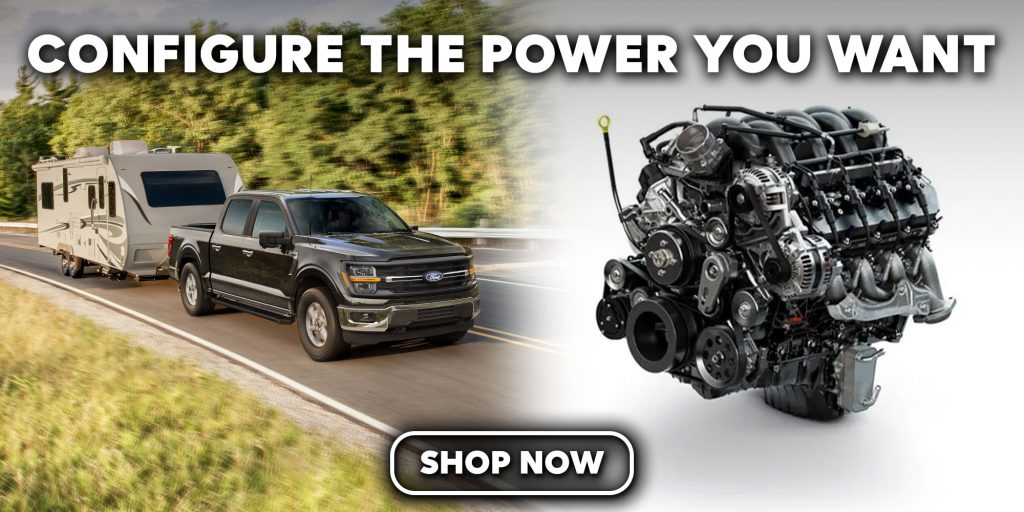
When you’re looking at a new Ford F-150 to help you power your commutes from the job site to off-road, you’ve come to the right place. The Ford F-150 engine options continue to make it one of the most capable and adaptable full-size trucks on the road. Whether you spend your days towing equipment across a job site, hauling gear for weekend adventures, or commuting with comfort and confidence, the latest Ford F-150 offers a powertrain for nearly every lifestyle. From daily usability to heavy-duty workloads, it’s built to match the way truck buyers live and work. If you want to experience the strength and refinement in person, schedule a test drive at Crossroads Ford of Sanford to explore the full range of Ford F-150 models available.
Bold Style & Smart Function
The Ford F-150 engine options are numerous, giving you a variety of work and drive styles to choose from. The truck has a purposeful exterior design that blends durability and style. From a strong, modern front fascia, sculpted lines across the body, and functional lighting that supports visibility during night work or early-morning starts, to thoughtful Ford F-150 engine options that enhance capability without overbuilding the truck. Tailor your truck from various trim levels, including popular choices like the Ford F-150 XLT, Ford F-150 Lariat®, and Ford F-150 Platinum®.
Exploring Every Powertrain in the Ford F-150 Engine Lineup
The strength of a Ford vehicle starts from under the hood. The wide selection of Ford F-150 engine options is engineered with advanced specs, including Ford’s modern direct-injection system, twin independent variable camshaft timing, and updated hardware designed to enhance performance, smoothness, and reliability. Depending on your vehicle configuration, there’s plenty that the Ford F-150 engine options can do for you, whether you value payload capabilities, towing adventures, or raw power.
2.7L EcoBoost® V6
The 2.7L EcoBoost® V6 is one of the most popular Ford F-150 engine options and also serves as a core part of the engine choices available on many Ford F-150 models. This engine delivers 325 horsepower and 400 lb.-ft. of torque, supported by modern engineering like a direct-injection system and twin independent variable camshaft timing for smooth response. It has a maximum towing capacity of 8,400 lbs. and a maximum payload capacity of 1,775 lbs., fitting well into the payload capabilities expected of a full-size truck. Because this is considered a smart and efficient standard engine, it’s great for daily commuting, light-duty work, and familiar tasks such as hauling materials for home improvement projects while maintaining solid gasoline fuel efficiency compared to the fuel economy of other engine configurations. This engine also pairs effectively with the 10-speed automatic transmission for a refined driving experience on the highway or at the job site.
5.0L Ti-VCT V8
The 5.0L Ti-VCT V8 is a classic V8 engine option in the Ford F-150 engine lineup, offering 400 horsepower and 410 lb.-ft. of torque. It boasts a maximum towing capacity of 12,900 lbs. and a maximum payload capacity of 2,225 lbs., making it a strong choice for weekend warriors who tow a camper or boat and carry moderate loads. Enhanced with Ti-VCT V8 technology and camshaft timing improvements, it gives drivers the durability and performance they expect from a long-trusted Ford vehicle. This engine is commonly found on popular trim levels such as the Ford F-150 XLT and Ford F-150 Lariat®, giving shoppers flexibility when choosing the right engine and vehicle configuration for long-term ownership, whether buying a new or used Ford F-150.
3.5L EcoBoost® V6
The 3.5L EcoBoost® V6 is one of the strongest and most capable Ford F-150 engine options, delivering 382 horsepower and 500 lb.-ft. of torque. It provides outstanding output without sacrificing smoothness, featuring a best-in-class maximum towing capacity of 13,500 lbs. and a maximum payload capacity of 2,440 lbs., making it ideal for drivers who need serious capability for towing large trailers or carrying heavy equipment. This engine’s performance is enhanced by the turbocharging system, strong internal components, and Ford’s signature engineering. Whether outfitted with the Tow/Haul Package, used for recreational hauling, or equipped for work, this engine supports some of the highest capability demands across all Ford F-150 offers.
3.5L PowerBoost® Full Hybrid V6
The 3.5L PowerBoost® Full Hybrid V6 blends muscle with efficiency better than any powertrain in the Ford F-150 engine lineup. Offering 420 horsepower and 570 lb.-ft. of torque, it pairs a gasoline engine with an electric motor, positioning it as the most advanced powertrain among modern available engines. It provides a maximum towing capacity of 11,600 lbs. and a maximum payload capacity of 1,740 lbs. For drivers seeking a mix of capability and fuel awareness, this engine is ideal. The PowerBoost® Full Hybrid V6 makes it possible to tow equipment, haul gear, or travel long distances while benefiting from hybrid technology that improves real-world efficiency. Owners will appreciate how this powertrain supports towing, hauling, and regular highway driving, all while providing excellent responsiveness that is highly valued by new truck shoppers.
High-Output 3.5L EcoBoost® V6
The High-Output 3.5L EcoBoost® V6 is tuned for enthusiasts who prioritize top-level performance among the Ford F-150 engine options. Producing 450 horsepower and 510 lb.-ft. of torque, this engine powers the Ford F-150 Raptor®, including race-inspired internals designed for off-road enthusiasts. With a maximum towing capacity of 8,200 lbs. and a maximum payload capacity of 1,410 lbs., it delivers the balanced capability expected of a performance-focused truck. This engine supports extreme off-road performance thanks to enhancements commonly paired with suspension technologies like the 5-Link Rear Suspension With Panhard Rod and off-road tuning. Whether navigating deep terrain or pushing through heavy loads, this engine excels in challenging conditions.
Supercharged 5.2L V8
The Supercharged V8 is the most powerful of all Ford F-150 engine options, delivering a remarkable 720 horsepower and 640 lb.-ft. of torque. Built for adrenaline-driven performance, its maximum torque and horsepower give it the strength needed for extreme off-road recreation. This engine is engineered for those who want maximum output, high-speed capability, and the strongest acceleration available in any new vehicle within the Ford F-150 lineup. Often associated with the most aggressive performance upgrades across Ford F-150 models, this engine brings together brute force and proven engineering for drivers who want the most capable truck Ford builds.
Strength, Variety, & Confidence in Every Drive
There has never been a better time to explore the wide range of Ford F-150 engine options, especially for those who want the perfect mix of strength, efficiency, and drivability. With a lineup engineered for real-world performance and tailored across multiple trims and needs, this full-size truck offers an engine for every lifestyle.To find the configuration that best fits your workday or weekend plans, visit Crossroads Ford of Sanford, and experience the Ford F-150 engine options with a test drive!
What Ford F-150 Bed Size Is Right For You?

The Ideal Ford F-150 Bed Size For Your Needs
The Ford F-150 bed size is one of the most important considerations when choosing your next Ford pickup. With a wide range of bed options, the Ford F-150 offers versatility that meets nearly every type of driver’s driving demands—from daily commutes to hauling gear at the job site. Whether you prioritize a short bed for maneuverability, maximum cargo volume for work, or the ideal balance of ground clearance and performance, the Ford F-150 has a configuration designed for you.
Built on a high-strength steel frame, the new Ford F-150 delivers durability, capability, and a premium driving experience. Choosing the right bed size not only impacts your cargo space but also your truck’s overall length, wheelbase, and overall handling across different locations. Visit Crossroads Ford of Sanford to find the Ford F-150 bed size that’s right for you!
Ford F-150 Truck Bed Size Options Explained
The Ford F-150 truck bed size lineup includes three bed sizes—the 5.5-foot box, the 6.5-foot, and the 8-foot bed—each designed to fit specific lifestyles. The smaller beds are perfect for city use, while larger beds shine for those who need more cargo box volume. The Ford F-150 SuperCrew® bed sizes emphasize family-friendly comfort, while the Ford F-150 SuperCab® bed sizes and Regular Cab bed sizes cater to utility and work use.
Thanks to Ford’s precision engineering, the bed size dimensions translate to impressive cubic feet of space, depending on your chosen bed configuration. Each Ford model offers a selection of cab options and trim levels, giving buyers flexibility to customize their Ford F-150 configuration for hauling, towing, and comfort.
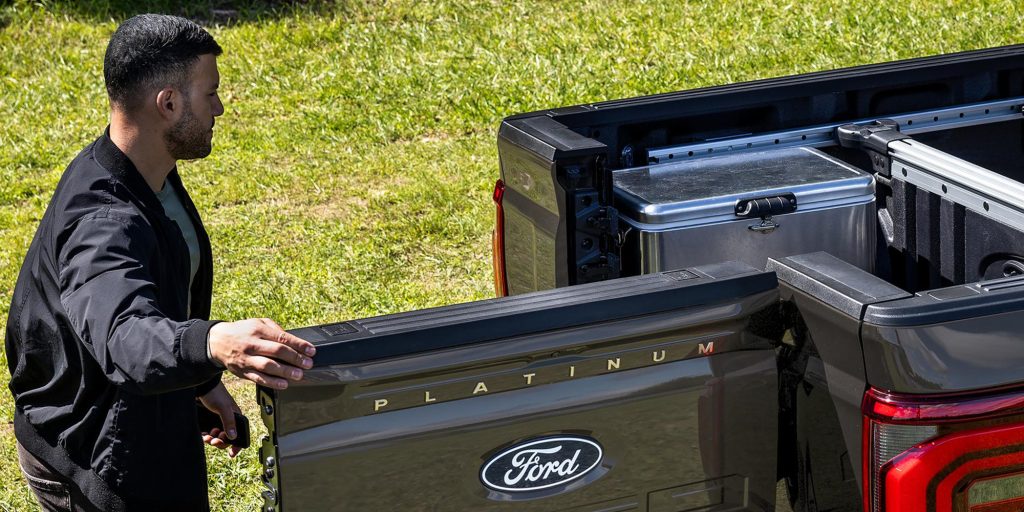
Each available bed comes equipped with intuitive bed features designed for practicality. The optional stowable loading ramps simplify loading, while the deployable box side steps make accessing your cargo a breeze. The available tailgate step, tailgate work surface, and remote tailgate release add everyday convenience. Ford’s Pro Power Onboard acts as a mobile generator, providing electricity for power tools or appliances, while other add-ons enhance cargo management through adjustable tie-downs and more.
How Bed Size Impacts Everyday Use
Parking, Maneuverability, and Practicality
Choosing the Ford F-150 bed size affects how easily you can park and navigate your surroundings. Shorter beds, like the 5.5-foot box, are ideal for tight urban spaces, while the mid-length option balances drivability with cargo volume. The 8-foot bed offers the highest towing capacity and payload, perfect for demanding job site work.
Work and Recreation
Every Ford F-150 SuperCrew model is built to handle both business and pleasure. Whether you’re towing equipment, hauling lumber, or packing for a family getaway, the Ford F-150 models are engineered for strength and reliability. Premium bed styles such as the King Ranch elevate comfort with refined interiors and a functional center console, merging luxury with rugged performance.
Matching Cab Styles and Configurations
The Ford F-150’s cab styles, including the SuperCab, SuperCrew, and Regular Cab, each pair uniquely with the different bed sizes. The SuperCrew cab maximizes passenger capacity, making it ideal for families or crews needing extra seating. The SuperCab blends versatility and cargo access, while the Regular Cab focuses on capability. Together, these cab sizes influence the Ford F-150 dimensions, overall balance, and exterior dimensions.
Pairing the right cab with the correct bed configuration allows you to tailor your Ford F-150 to fit your routine. For example, a SuperCrew cab with a standard bed is ideal for suburban use, while a SuperCab with an 8-foot bed suits professional hauling.
Towing, Payload, and Capability
Performance isn’t just about pickup truck bed sizes—it’s about strength and structure. The Ford F-150’s high-strength steel frame supports outstanding towing capacity and payload. While the 8-foot bed accommodates higher payloads, even the smaller beds maintain excellent durability. Combined with features like lift assist and box lights, the truck is built to simplify hauling in all conditions.
Ford engineers have also prioritized safety, integrating advanced safety features across all Ford F-150 models, ensuring dependable performance regardless of model year or environment.
Everyday Scenarios for Choosing the Right Bed
Your lifestyle determines your ideal Ford F-150 bed size. Urban drivers may favor smaller beds for tight parking, while outdoor enthusiasts or contractors benefit from larger beds for enhanced storage. Each Ford F-150 configuration delivers an adaptable mix of space, power, and comfort that meets personal and professional needs alike.
The Ford F-150’s impressive cargo management systems, combined with generous cargo volume, provide the versatility needed for any task—whether transporting tools, furniture, or weekend adventure gear.
Experience the Ford F-150
Explore the new vehicle lineup to find the Ford F-150 bed size at Crossroads Ford of Sanford. Our experts will guide you through bed styles, cab options, and trim levels to help you find the perfect match. Take a test drive today and discover firsthand which of the Ford F-150 bed sizes is best for you!
Ford F-150 Towing Capacity Guide
Understanding The Towing Capacity From America’s Favorite Truck
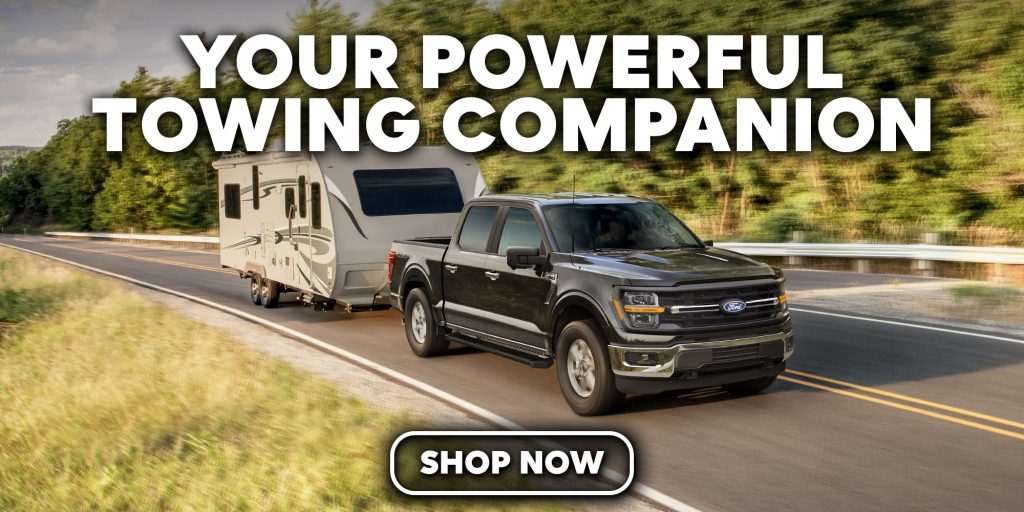
The Ford F-150 towing capacity has long set the benchmark for the full-size pickup truck segment, balancing raw strength with smart technology and remarkable adaptability. At Crossroads Ford of Sanford, customers exploring the Ford F-150 lineup discover how Ford engineers have fine-tuned performance specs and towing capabilities to meet virtually every driver’s hauling needs—from weekday work at the job site to weekend recreation.
Function and Purpose
When discussing towing and payload performance, Ford’s latest F-150 demonstrates why it’s been the nation’s best-selling truck for decades. The truck’s available Ford F-150 engine options offer unmatched flexibility. Drivers can choose from several different engine options, including the 2.7L EcoBoost® V6, 5.0L Ti-VCT V8, the advanced 3.5L PowerBoost® Full Hybrid V6, and more. Each brings unique Ford F-150 towing power and fuel efficiency. With truck configurations spanning Regular Cab, SuperCab®, and SuperCrew®, plus multiple bed sizes, there’s a setup to fit every purpose.
Across the board, Ford F-150 offers up to an impressive towing capacity of up to roughly 13,500 lbs. when properly equipped. That number depends on vehicle configuration, bed configuration, payload weight, and the Tow/Haul Package and Max Tow Axle. Whether you’re hauling materials, towing boats, or transporting heavy loads, this full-size truck adapts to every challenge with power and precision.
Engine and Powertrain
Let’s look under the hood. The 2.7L EcoBoost® V6 engine delivers remarkable low-end torque and quick response, offering up to 8,400 lbs. of tow capacity. Moving up, the 5.0L Ti-VCT V8 achieves a maximum Ford F-150 towing capacity of up to 12,800 lbs, while the 3.5L PowerBoost® Full Hybrid V6 produces a combined 420 horsepower and 570 lb.-ft. of torque with around 11,600 lbs. of maximum towing capacity. Finally, the 3.5L EcoBoost® V6 offers the maximum 13,500 lbs. of towing capability. Together, these powertrain options create one of the broadest towing specs spreads in the segment.
Towing Features and Technology
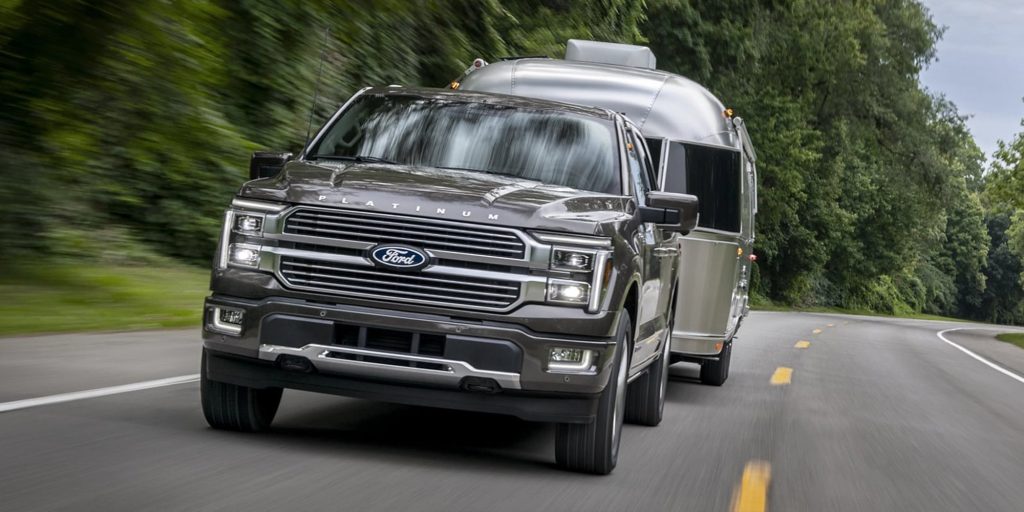
Beyond muscle, the Ford F-150 integrates cutting-edge towing technology to ensure towing safety and convenience. The available Integrated Trailer Brake Controller and standard Trailer Sway Control deliver confidence while on the move, while available Pro Trailer Hitch Assist™ and Smart Hitch simplify setup and monitor tongue weight. Add the Tow/Haul Package and more towing features like trailer coverage through Ford’s Blind Spot Information System, and you’ll enjoy unmatched peace of mind on every haul.
The truck’s features such as max towing, towing technology, and towing features work together to maximize control. Combine that with intuitive innovations like the blind spot system and rearview camera aids, and towing a trailer feels smoother than ever.
Payload and Truck Bed Design
While the Ford F-150’s towing capacity impresses, its payload capabilities remain equally strong. The truck achieves a maximum payload capacity of 2,440 lbs. depending on engine and axle ratio. This strength comes from a fully boxed high-strength steel frame and a truck bed made from military-grade aluminum alloy, reducing curb weight without sacrificing durability.
Whether hauling gravel or gear, Ford provides ample payload specs transparency on the door jamb, helping owners confirm their payload rating before loading up. For added usability, features like LED bed lighting, an available tailgate work surface, and available features like power outlets make the bed as practical as it is tough.
Trim Levels and Real-World Function
Across the Ford F-150 trim levels, every model is designed to maximize performance. The Ford F-150 XLT towing capacity delivers up to 13,500 lbs. with the right setup, while the Ford F-150 Tremor® towing capacity reaches similar numbers with off-road hardware up to 13,100 lbs. Other variants like the Ford F-150 STX® towing capacity and Ford F-150 Lightning towing capacity can reach up to 12,800 lbs. and 10,000 lbs. respectively
You’ll find that the Ford F-150 tow capacity is more than enough for your daily needs. With towing power, payload capabilities, and refined comfort, it’s no wonder this new vehicle leads the class.
The Right Configuration for You
Selecting the right configuration is key to realizing the Ford F-150’s true tow capacity. A regular cab with a long bed suits those prioritizing payload weight and raw numbers, while SuperCrew models emphasize comfort and convenience. The Ford F-150’s bed configuration and bed size affect how much weight can be safely carried or pulled, so reviewing your usage—boats, trailers, campers, or heavy equipment—is essential before purchase.
For those balancing family comfort with capability, the 3.5L PowerBoost® Full Hybrid shines by offering hybrid efficiency without compromising towing potential. Every option provides flexibility for work, adventure, or recreation—making the Ford F-150 a top choice among full-size truck buyers.
Tow With Confidence
In summary, the Ford F-150 towing capacity showcases a legacy of innovation, combining brute strength, sophisticated towing technology, and everyday versatility. From EcoBoost® V6 power to the hybrid-boosted systems, Ford proves that toughness can coexist with intelligence and comfort. Whether you’re towing horses, boats, or construction trailers, the Ford F-150 has the performance specs to deliver confidence and control.Visit Crossroads Ford of Sanford to experience this capability firsthand. Schedule your test drive today and see why the Ford F-150 remains a leader in max payload and towing. Whether it’s your first truck or a used Ford F-150, every model offers built-for-purpose power, durability, and precision. Visit your Ford dealer in Sanford, NC, today!
Ready Set Ford
A New Era for the Blue Oval
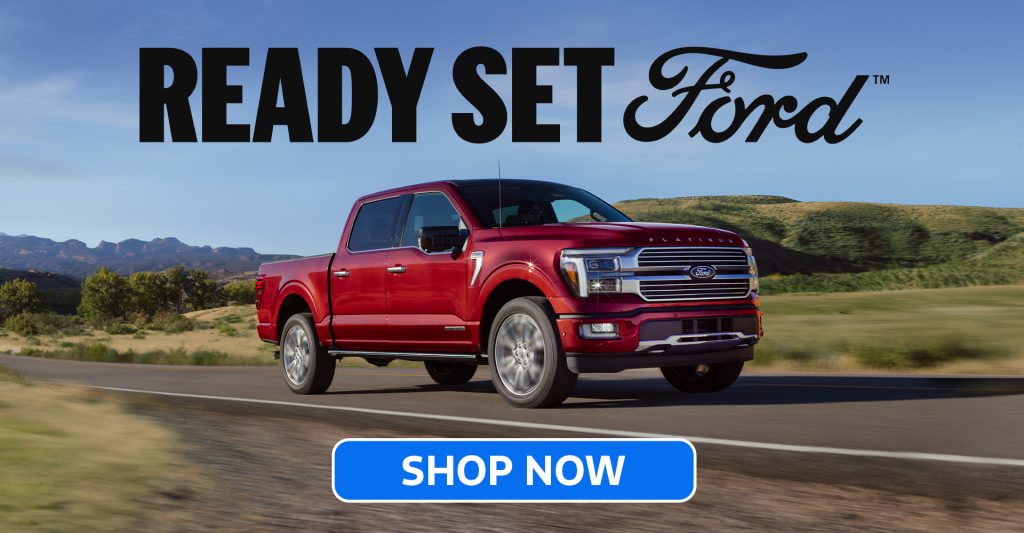
Ford Motor Company is entering a bold new chapter, and Crossroads Ford of Sanford is excited to share what it means for our customers. The new global advertising platform, Ready Set Ford, is more than just a fresh look—it’s a strategic shift designed to connect with drivers in new and inspiring ways.
What is “Ready Set Ford”?
“Ready Set Ford” is Ford’s new advertising platform, built on the foundation of capability, passion, community, and trust. It’s designed to celebrate not only what Ford vehicles can do, but what they empower you to do.
This rebrand focuses on three key shifts:
- Highlighting Our Strengths – Ford’s legacy of strength, innovation, and trust remains front and center.
- Empowering Customers – The campaign celebrates the lifestyles Ford enables: building businesses, chasing thrills, and seeking adventure.
- Leading With What You Love – Expect more focus on the Ford vehicles and services that customers are most passionate about, from trucks to SUVs to performance icons.
Why It Matters
At its heart, Ready Set Ford is about you—the driver. Whether you’re pushing limits with a Ford Bronco, building your business with a Ford F-150, or heading out for family adventures in a Ford Explorer, this rebrand is about helping you live your best days behind the wheel.

Visit Crossroads Ford of Sanford
As your local Ford partner, Crossroads Ford of Sanford is proud to bring this new era to life. Stop by our showroom to see the latest Ford lineup and experience firsthand how Ready Set Ford is shaping the future of driving.
Ready. Set. Ford.

Ford F-150 vs. Chevy Silverado 1500: Head-To-Head Comparison
When it comes to full-size pickup trucks, the Ford F-150 vs. Chevy Silverado 1500 are two names at the top of everyone’s list. Both are icons in the segment, delivering performance, comfort, and style in ways that cater to hard workers and weekend adventurers alike. These models are leading full-size pickup trucks in the market, offering exceptional towing and payload capabilities for a variety of needs. But when it comes down to value, capability, and innovation, the Ford F-150 stands a step ahead. Come see for yourself at Crossroads Ford of Sanford, where we invite you to test-drive the Ford F-150 and experience the difference between the Ford F-150 vs. Chevy Silverado 1500 firsthand. This is a great opportunity to get behind the wheel of a new truck and let our team help you navigate the current truck market to find the perfect fit for you.
Rugged Design Meets Raw Power
Comparing the Ford F-150 vs. Chevy Silverado 1500, you’ll discover some surprising specs that make the Ford F-150 a standout choice. The Ford F-150 makes a bold entrance with sleek standard LED lighting, a black coast-to-coast grille, bed storage boxes, and functional design like Pro Power Onboard and dual front tow hooks. The Ford F-150 is available in a variety of body styles, including Regular Cab, SuperCrew®, and Super Cab configurations, as well as short and extended bed options, allowing you to choose the best fit for your needs. From eye-catching colors like Antimatter Blue Metallic to appearance packages like the STX® Black or Lariat® Black, the Ford F-150 allows full personalization. For added convenience, Ford offers a Twin-Panel Moonroof and the versatile Pro Access Tailgate swing-out door.
Under the hood, the Ford F-150 boasts a wide range of engine options to suit different needs. It starts strong with a 2.7L EcoBoost® V6 engine putting out 325 horsepower, and climbs to an impressive 3.5L PowerBoost® Full-Hybrid V6 delivering 430 horsepower and 570 lb.-ft. of torque. For the ultimate Ford F-150 power, the Ford F-150 Raptor® R™ contains a Supercharged 5.2L V8. The Chevy Silverado 1500 also has a variety of engine options, starting with the 2.7L TurboMax™, which puts out 310 horsepower, lower than the Ford’s standard. Its three other engine options aren’t able to surpass the Ford F-150’s torque maximum of 640 lb.-ft., only reaching up to 495 lb.-ft. If payload capacity is a priority, opt for the Ford F-150’s 3.5L EcoBoost® V6 offering a max payload of 2,440 lbs., a number the Chevy falls short of at up to 2,260 lbs. When you need muscle for towing, the Ford F-150 vs. Chevy Silverado 1500 towing capacity makes a clear distinction. The Ford reaches up to 13,500 lbs. of maximum towing capacity when properly equipped, beating the Chevy’s 13,300-lb. limit. Looking further, the Ford F-150 XLT vs. Chevy Silverado 1500 stands out with Ford’s Pro Trailer Backup Assist™ feature, along with several other towing tech additions. Towing adventures become simplified as a result, a feat that the Chevy Silverado 1500 couldn’t match.
Tech-Savvy Cabins Built for the Road Ahead
The Ford F-150 vs. Chevy Silverado 1500 interiors focus on intelligent tech and elevated comfort. The Ford’s standard 12-in. capacitive touchscreen with SYNC® 4 offers seamless Apple CarPlay® and Android Auto™. Productivity is always within reach with features like the available Interior Work Surface, Head-Up Display, and Ford BlueCruise for hands-free highway driving. The Ford F-150 stands out for its superior interior quality, especially in higher trims, offering premium materials and exceptional craftsmanship. The Chevy Silverado 1500, on the other hand, offers a 7-in. standard infotainment display with wireless smartphone connectivity, and even Google Built-In, but its standard tech starts lower and lacks Ford’s integrated work-focused features. The Ford F-150 vs. Chevy Silverado 1500 reliability don’t compromise when it comes to safety. Each model has its own suite of responsive safety features to ensure a smooth ride every time. With Ford’s Co-Pilot360® suite, you’ll get Pre-Collision Assist® with Automatic Emergency Braking, Lane Departure Warning, Adaptive Cruise Control, and more. The Chevy Safety Assist suite brings standard basics as well, but the Ford F-150 vs. Chevy Silverado safety comparison shows Ford’s robust and expandable suite adds more confidence for every mile.
The Truck For You
The Ford F-150 vs. Chevy Silverado 1500 brings impressive performance, style, and functionality to the table, but Ford edges out with greater payload, advanced hybrid power, superior tech integration, and better versatility for everyday use. Add in Ford’s trademark customization and intelligent driver assistance, and it’s clear the Ford F-150 stands in a class of its own. If you’re ready to get behind the wheel of one, visit Crossroads Ford of Sanford today!
Connect with us

